
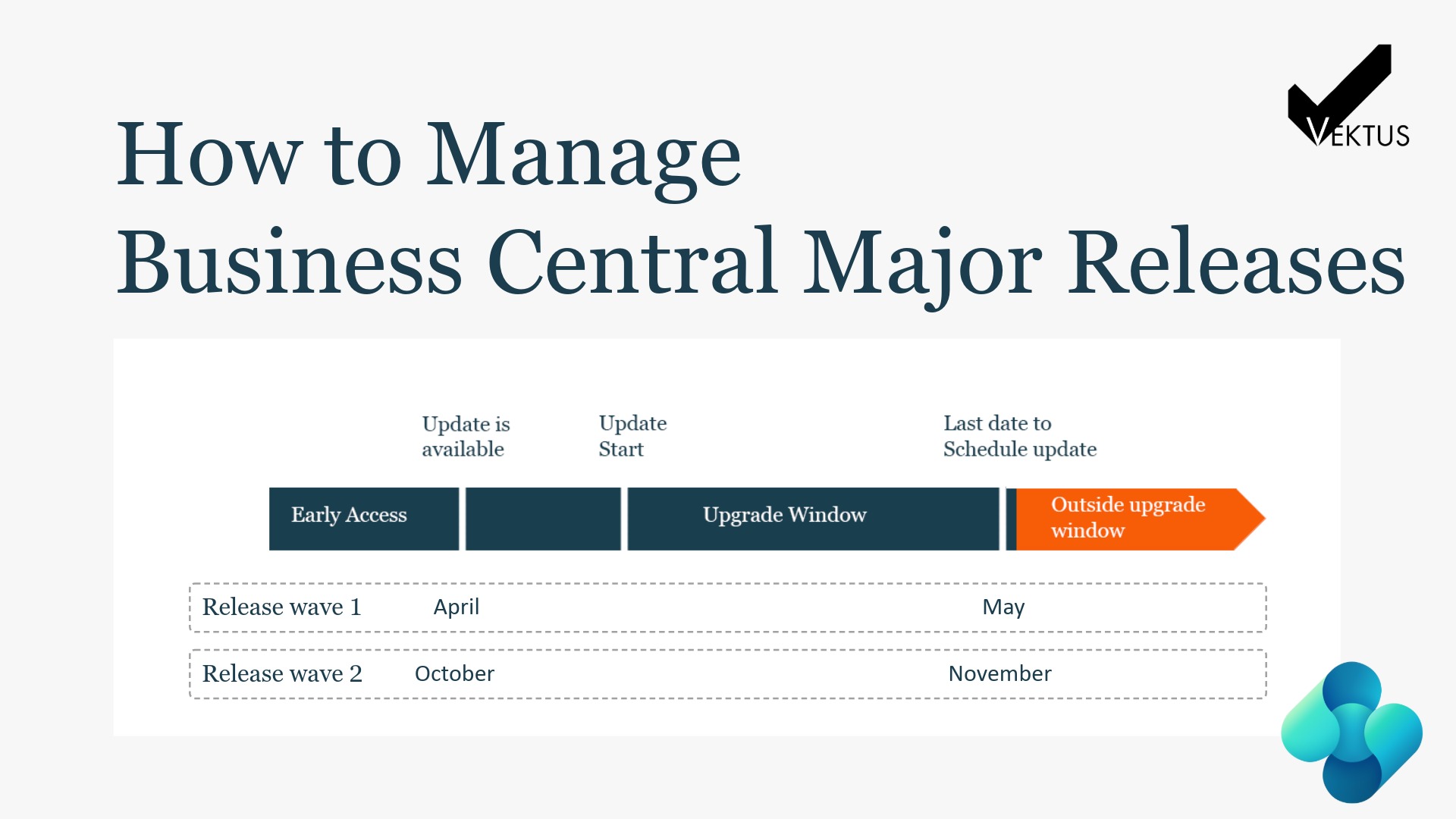
Source: Model developed based on Microsoft’s Dynamics 365 release schedule: https://learn.microsoft.com/en-us/dynamics365/get-started/release-schedule
Business Central upgrades are no longer projects. They’ve become an ongoing discipline.
Many companies have traditionally viewed ERP upgrades as major projects carried out every three, five, or even seven years. However, with cloud-based solutions such as Microsoft Dynamics 365 Business Central, the reality is different. Updates are delivered continuously, with Microsoft releasing two major versions each year along with a series of smaller updates throughout the year.
This means that upgrades are no longer a one-time activity. They have become a continuous, recurring process.
From Reactive to Proactive
Historically, companies could wait several years before upgrading their ERP system. Upgrades were often large-scale projects that required significant investments of time, resources, and careful planning.
In the cloud world, things work differently. New versions are released on an ongoing basis, and updates are delivered within predefined update windows. As a result, the question is no longer whether your company should upgrade, but how you choose to manage those upgrades.
A proactive approach is all about being prepared. It means keeping up with upcoming changes, assessing their impact on your business processes, carrying out relevant testing, and planning updates before they reach your production environment
New features are only part of the story
When Microsoft releases a new version of Business Central, it’s not just about new features. Updates can also affect existing workflows, apps, integrations, and custom-built functionality. While an update may be applied automatically from a technical perspective, there is no guarantee that every part of the solution will continue to work exactly as before.
For companies with business-critical processes in finance, warehousing, manufacturing, or project management, even minor disruptions can have significant consequences. That is why more and more organizations are taking a structured approach to testing and upgrade planning, allowing potential issues to be identified and addressed before they impact day-to-day operations. They choose a Proactive Upgrade approach.
More stable operations and better decision-making
A key benefit of Proactive Upgrade is that it gives your organization greater control over the evolution of your ERP platform.
Instead of being caught off guard by changes, organizations have time to evaluate which new opportunities are relevant and which areas require special attention. At the same time, it becomes easier to prioritize resources and plan the testing and implementation activities needed to ensure a smooth transition.
In addition, a continuous approach enables organizations to benefit more quickly from the innovations introduced by Microsoft. New capabilities in automation, reporting, AI, and process optimization can create significant value, but only if the organization is prepared to adopt and utilize them.
A discipline that is here to stay
Cloud-based business systems evolve much faster than traditional on-premises solutions. As a result, the ability to manage continuous change is becoming an increasingly important capability for organizations.
Ultimately, Proactive Upgrade is about more than just technology. It is about creating stability in day-to-day operations, reducing the risk of business disruptions, and ensuring that your organization can take full advantage of the improvements and innovations delivered over time. In an era where the ERP system often forms the backbone of the business, proactive upgrade management has become an essential part of a modern operational strategy.
We reserve the right to make corrections for any errors, omissions, or typographical mistakes.


